Bellerose Terrace Medical Waste Disposal – MedXwaste provides dependable and reliable services for healthcare facilities and medical waste generators located in Nassau County, NY. We provide both support and guidance throughout the waste disposal process, so you can rest assured you’re always in compliance. That includes hauling away medical waste from doctors, dentists, funeral homes, tattoo parlors – and anywhere else where medical waste is created.
(more…)Defining RCRA – Accuracy is critical when it comes to hazardous waste determinations. Facilities must keep track of the total volume for their waste generator status – which can change from month to month.
The Resource Conservation and Recovery Act (RCRA) is an important law put in place to protect the public from potential hazards of waste created by generators. The law forms a framework for how to properly manage both hazardous and non-hazardous waste. This includes the generation, transportation, treatment, storage, and disposal of the waste. What is also often referred to as “Cradle to the Grave.”
(more…)From the moment you generate medical waste, the disposal of that waste is ultimately your responsibility. If you run a facility that generates medical waste, then you should be familiar with local and federal laws that govern safe disposal. However, how medical waste is disposed of doesn’t just stop at the red bag or sharps container. Do you understand what “cradle to grave” regulations are and what it means for your medical waste?
What cradle to grave means is from the moment you generate medical waste, the disposal of that waste is ultimately your responsibility. Even if you hire someone else to do it, you are still liable for any failure on their part to follow the law.
Cradle to grave comes from The Resource Conservation and Recovery Act of 1976, or RCRA. This was enacted because, prior to this law, only 10 percent of hazardous waste material was being managed properly.
One section of RCRA specifically outlines the management of hazardous waste, from “cradle to grave,” meaning that hazardous waste must be handled in a way that protects both the environment and human health.
Cradle to grave also states that a generator – whether a hospital, medical spa, tattoo parlor, or veterinary practice – is responsible for its waste from the point of generation to its final destination of disposal. There are no expiration dates, no time limits, and hiring someone else to transport and dispose of your waste does not absolve you of this responsibility.
It’s because of this we here at MedXwaste stress compliance and accountability with our customers. Do you have a medical waste management plan? Are your containers properly labeled and filled? Are you storing your medical waste out of common areas and away from general traffic? Proper packaging, labeling and transportation of regulated medical waste is mandated by federal and state regulations. Even if you follow everything to the letter, don’t rely on just anyone to transport and haul away your medical waste. Remember, you are still responsible for it, even when it leaves your facility!
If an incident happens to occur at any point during your waste’s lifecycle, you will be held liable and may also be obligated to pay costs associated with cleanup and penalties.
Due to the cradle to grave provision within RCRA, MedXwaste cannot legally take ownership of your waste. However, our trained professionals will ensure that your waste is disposed of properly, safely, and securely, so that you maintain compliance under the confines of RCRA.
Contact MedXwaste to discuss service options today!
Service Areas: Long Island Medical Waste; New York City Medical Waste; Westchester Medical Waste and more!
If you’re working off of outdated information, it’s time to consider OSHA training, and it’s easier than you think!
Does your practice or place of business have a systematic approach to meeting OSHA guidelines, or are you working off of seriously outdated information? If it’s the latter, then it’s time to consider OSHA training.
Some may feel that starting an OSHA compliance plan is too complicated, probably because hiring a consultant is cost-prohibitive. Most consultant-based programs run about $4,000, and for smaller practices, this can be a hit to already strapped budgets.
If you’d rather do it yourself, there’s a much easier way, and that’s through MedXwaste’s Online OSHA Compliance Program.
Why should you consider this option for your practice?
-
You’ll stay current on all safety data sheets.
Our current system grants you access to millions of MSDS/SDSs.
-
You need a safety plan.
You know you need a safety plan to be OSHA compliant but haven’t the faintest idea where to start. Our program can have your safety plan up and running in minutes.
-
Federal regulations are changing and confusing. How do you keep up?
Our program has up-to-date access on all federal regulations, so you’ll never have to second guess yourself, thus compromising safety and compliance.
-
You can train your team.
MedXwaste’s Online OSHA Compliance program helps you train your staff on new and revised procedures. A well-trained employee means risk mitigation and better safety measures. Topics include Bloodborne Pathogens, Hazcom, HIPAA, DoT, Fire Safety, and Electrical Safety.
-
Simply put, it’s easy.
Developing a comprehensive OSHA program may seem like an overwhelming task, but our program simplifies it so you can focus on keeping your staff, patients, and communities healthy.
Call us today at (844) RED-BAGS for more information!
Service Areas: Long Island Medical Waste; New York City Medical Waste; Westchester Medical Waste and more!
Hospital, medical reference, and research laboratories all produce hazardous laboratory waste. MedXwaste covers many industries that produce regulated medical waste and hazardous waste, and while some may seem surprising (like airports), facilities like laboratories are anything but.
Of course, labs are not just the offices you visit to have a blood draw or a throat culture; labs go beyond medical practices. There are hospital labs, medical research and reference labs, and educational research labs.
While labs come in many forms, all will produce some kind of medical or biohazardous waste. What kinds of waste does this include?
Regulated Medical Waste
Regulated medical waste (RMW) is the byproduct of medical waste that may be contaminated by blood, body fluids, or other potentially infectious materials. This waste is also known as biohazardous waste or infectious medical waste. This includes liquid or semi-liquid blood or other potentially infectious materials (OPIM) and pathological and microbiological wastes containing blood or OPIM.
Sharps Waste
Sharps waste is medical waste that is composed of used sharps and is classified as biohazardous. Sharps is actually the medical term for a sharp-pointed object that can cut or puncture the skin, and this includes needles, syringes, lancets, auto-injectors, and connection needles. In a research lab setting, sharps waste can also include pipettes, glass slides, and contaminated glass.
Hazardous Waste
According to the EPA, hazardous waste is any waste that is ignitable, corrosive, reactive, or specifically listed by the EPA as a toxic waste. Material Safety Data Sheets (MSDSs) are a good source of information for determining whether a particular material meets any of these criteria. Hazardous wastes may include byproducts and wastes from chemical reactions or unwanted commercial products and chemicals. Examples can include off-specification chemicals, spent glass cleaning ware, flammable pollutants, and pollutants which result in the presence of toxic gases, vapors, or fumes.
Tips for Best Practices in Hazardous Laboratory Waste Removal
Laboratories are generally responsible for disposal of their own non-hazardous wastes, but MedXwaste is available to assist laboratories with proper disposal methods for any and all hazardous waste. Our online OSHA Compliance Program also offers access to millions of MSDS/SDSs so that laboratories can make informed decisions about what determines waste to be hazardous.
Contact MedXwaste today to discuss our routine services for laboratory waste removal.
Service Areas: Long Island Medical Waste; New York City Medical Waste; Westchester Medical Waste and more!
Medical spas are becoming a staple in many towns and communities. Here’s how MedXwaste serves the medical spa industry.
Medical waste removal programs ensure the health and safety for members of the public, as well as healthcare facility personnel by minimizing or eliminating exposure to biohazardous wastes containing pathogenic organisms and sharps. This is not exclusive to hospitals and laboratories, but also tattoo parlors, veterinary practices, funeral homes, and assisted living facilities, but that’s not all that’s included under the medical waste umbrella.
There is a growing demand in the spa industry that goes above and beyond massages and pedicures; nowadays, many clinics are opening medical spas – hybrids of medical clinics and day spas – that help patients with cosmetic enhancements. This includes Botox injections, skin rejuvenation, laser hair removal, laser vein therapy, collagen induction therapy, and medical grade peels.
A medical spa is less about relaxation and more about physical, visual results, but these treatments are given in a spa-like environment. However, medical spas may also offer relaxing therapies, such as acupuncture, which require needles that go below the skin’s surface.
In addition to the above procedures, many offer permanent cosmetic application, such as permanent make-up, which is administered similarly to a tattoo; a sterilized, disposable needle is used to implant colored pigment beneath the top layer of skin.
Because of the very nature of the services offered, medical spas are held accountable for their medical waste just as any other producer of medical waste. This includes the implementation and enforcement of medical waste regulations as they apply to handling, storage, treatment, and disposal of biohazardous waste.
Most medical spas have at least one doctor, esthetician, and nurse on hand, all of which must be knowledgeable in medical waste removal procedures.
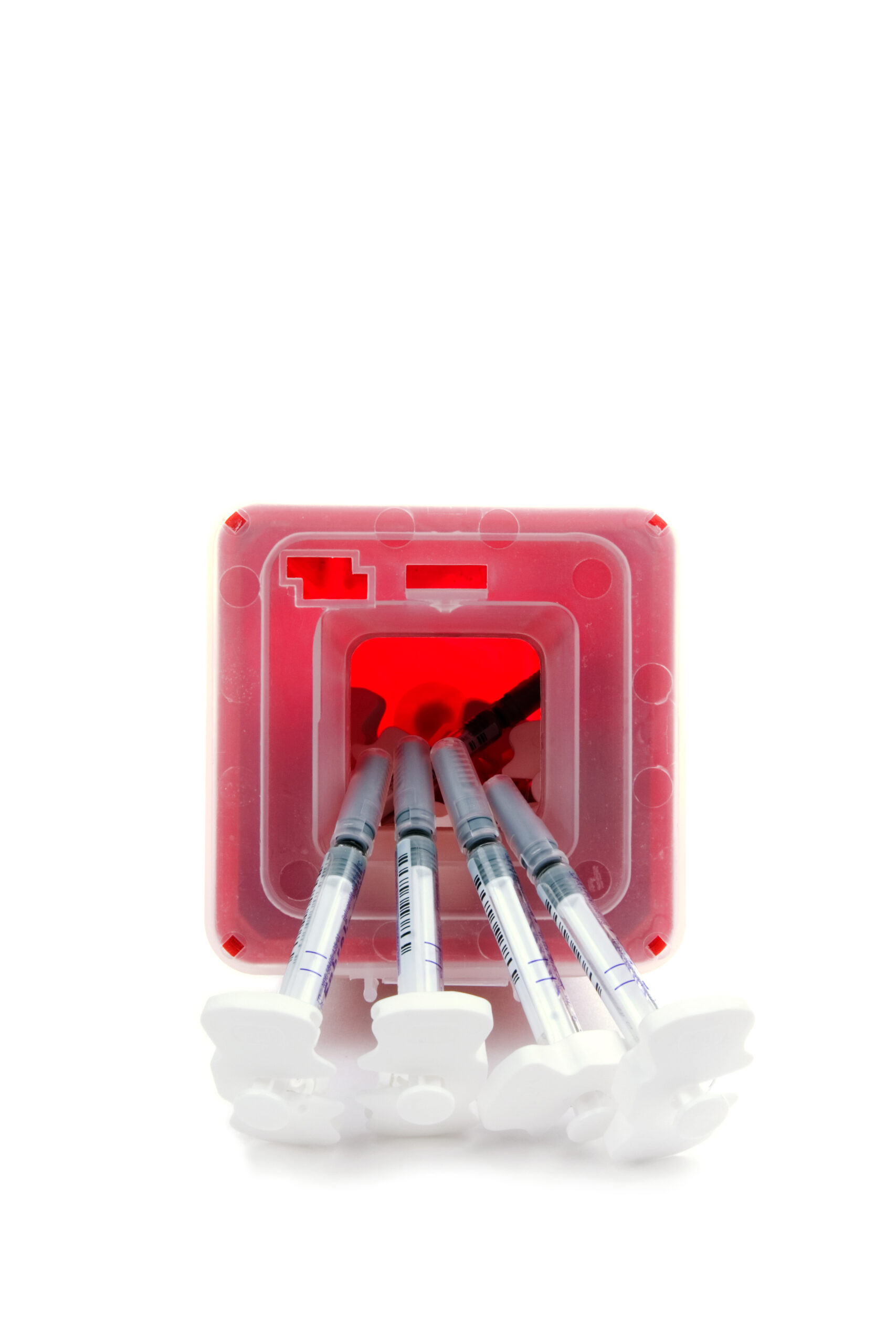
Medical spas also deal with a lot of sharps waste, which is a term applied to objects such as needles and scalpel blades. A sharps hazard lies in the fact that it is designed to pierce the skin. Wastes containing both infectious material and sharp objects create particular hazards for anyone handling them or coming into contact with them.
MedXwaste offers medical waste removal programs for medical spas, whether it’s needles, red bag waste, or any other medical waste. We also offer an online OSHA Compliance Training program for all staff that work at medical spas for safety training and safety planning.
Contact MedXwaste today to learn about all of our products and services, including the safe disposal of medical spa waste.
Service Areas: Long Island Medical Waste; New York City Medical Waste; Westchester Medical Waste and more!
Airport Medical Waste? Handling Medical Waste in the Least Likely Places.
Being in the medical waste removal industry, we tend to cover a lot of topics that deal with more common medical waste producers, such as hospitals, laboratories, and medical clinics. While those are the more common producers of medical waste, there are some obscure industries that, dare we say it, might fly right over your head.
While the bad pun may have been intentional, it’s actually a clue to the least common place you’d think of that would be associated with medical waste.
It’s the airport!
Frequent fliers may be aware that airports such as O’Hare International Airport and JFK International Airport are also home to busy medical clinics, but for those less traveled, it might be a bit of surprising trivia.
These facilities are available for travelers who may have fallen ill or in need of travel medicine, including vaccinations. JFK Advanced Medical P.C. offers international travelers pre-travel consultation and evaluation, contingency planning during travel, as well as post-travel follow-up and care. The clinic also administers immunizations based on the CDC’s recommendation for international travel.
Aside from in-house medical clinics, airports are havens for all kinds of trash, and believe it or not, some of it is considered regulated waste despite it seeming harmless.
According to the Orlando Sentinel, the Orlando International Airport and Orlando-Sanford International Airport treats uneaten scraps of food as medical waste.
The reason?
This type of trash cannot be tossed into a dumpster with other garbage. This garbage must actually be treated because it falls under two jurisdictions: the U.S. Department of Agriculture (USDA) and Customs and Border Protection (CBP). This is to prevent the spread of agricultural or animal disease into the U.S.
While the concern is valid, it becomes an additional set of regulations for airport officials.
Jet Air, a Fixed Base Operator (FBO) at Austin Straubel International Airport (GRB) in Green Bay, Wisconsin installed a trash-sterilization building, fitted with what is similar to a large hospital autoclave to handle all international trash.
So, you see that medical waste is not something that is exclusive to the medical industry itself; medical waste is a broad term that covers even what seems innocuous, and that includes food scraps from other countries that could pose a harm to domestic agriculture and wildlife.
MedXwaste services all industries, from healthcare to veterinary, and yes, even airport medical waste removal. Our industry experts work with you to create safe, responsible, and customized programs to collect and dispose of your medical waste.
Contact MedXwaste today!
Service Areas: Long Island Medical Waste; New York City Medical Waste; Westchester Medical Waste and more!
Top Medical Waste Removal Mistakes
Is your facility guilty of these common medical waste removal mistakes? Laboratories, hospitals, private practice offices, dental facilities, and even veterinary offices are all places that produce medical waste, and they are required by federal, state, and even local laws, to create a medical waste removal plan.
Despite the abundance of information on proper disposal and the laws that back this up, there are still some common mistakes that people make with medical waste removal. Not only is this a compliance issue, it’s an environmental and health issue that can be costly and detrimental if ignored.
What are some of the top medical waste removal mistakes?
Inconsistent training of staff
A compliant, safe, and efficient medical waste removal program is only as strong as the people who implement and follow it. One of the top mistakes medical waste generators make is not training staff consistently. It is imperative that facilities employ the use of the resources available, not only because it’s the law, but a streamlined program mitigates risk. Agencies like the EPA and OSHA offer resources for medical waste producers to help prepare a training program that will ensure the safety of workers, as well as decrease the chances of infection and contamination.
MedXWaste can help you develop a program for proper and compliant medical waste removal through our OSHA training program.
Improper labeling of medical waste and biohazardous waste containers
Medical waste packaging and labeling in a facility that deals with regulated medical waste is the responsibility of the facility itself. Packaging includes sharps containers, biohazard containers, plastic bags, and reusable containers. Failure to comply with safe containment is both an environmental issue and community health issue, one that can comes with hefty fines.
Many states categorize waste into sub-categorizes, such as cultures and stocks, human blood, blood products, sharps, and animal waste. Keeping types of medical waste separate and using properly marked containers is not only mandated by law, it helps you choose how and when, not to mention whom removes the waste for you.
Mishandling of medical waste and removal
Whoever signs the manifest for waste pickup must have had the proper OSHA/DOT training and knowledge behind the medical waste. If your average Joe signs for anything that involves medical waste, your facility will receive a citation for non-compliance.
Inadequate signage
Hazardous waste requires special handling, disposal, and storage. Both the EPA and DOT have requirements that must be met in order to properly store and dispose of waste. Failure to post signage about restricted areas, hazardous containers, or infection control can put staff and patients at serious risk
Avoid mistakes. Work with a medical waste removal provider like MedXwaste.
The best way to avoid mistakes is to work with a certified and professional medical waste removal provider like MedXwaste. Established by professionals with extensive experience in the medical waste business, MedXwaste helps our customers to stay in compliance with the law.
Contact MedXwaste today to discuss our full-service options, from pickup to training and compliance.
Service Areas: Long Island Medical Waste; New York City Medical Waste; Westchester Medical Waste and More!
3 Ways to Reduce Medical Waste
Why reduce medical waste? The answer is simple: it can help cut costs while keeping the environment safe.
How much medical waste does your facility produce in a week? A month? A year? A medical waste removal program is designed to mitigate risk and prevent contamination for staff and the communities they serve, but one of the goals of waste management should also be to reduce the amount of regulated medical waste generated.
Reduction in medical waste is not only beneficial for the environment, but it’s also good for the bottom line. According to a medical waste report from MarketsandMarkets, the …”global Medical Waste Management Market is expected to reach USD 13.3 Billion by 2020 from USD 10.3 Billion in 2015.”
The two major reasons for reducing medical waste are simple: it can help cut costs while keeping the environment safe. Here are three simple ways to reduce medical waste:
- Proper segregation and classification
Segregating medical waste and using properly marked containers is not only good practice, it’s economical and leads to less waste. Keep red bag waste separate from solid waste collection containers this way staff won’t blindly drop items in the wrong bin. Properly label all containers so regular trash goes into the trash, sharps go into sharps containers, and red bag waste goes into red bags. Keep signs posted so that staff know what waste to put in its proper container.
- Where applicable, use reusable equipment instead of single-use
Certain sharps can be disinfected and recycled. Always check on equipment use before purchasing. Know your federal and local laws on whether single-use is allowed in your area. MedXwaste can help you with compliance laws to remain compliant and to reduce medical waste.
- Develop a medical waste removal plan
Healthcare facilities should have a waste management policy and a waste management plan, including targets such as what to recycle and what to toss, reducing the number of accidents and incidents associated with waste management, and the amount of hazardous materials purchased. A plan can provide actionable data, revealing the financial and health benefits of waste reduction.
Healthcare facilities can benefit by taking a closer look at their waste stream and understanding how much is regular garbage and how much is hazardous waste. The key to reducing the volume without raising the risk is to train staff to properly classify and dispose of waste.
MedXWaste can help you develop a program for your medical waste removal procedures through our online OSHA training program. We also offer equipment, including bins, red bags, and containers so that your medical waste is properly stored, segregated, and compliant.
Better medical waste disposal policies lead to better medical waste management, and that means higher revenues and healthier communities.
Contact MedXwaste today.
Service Areas: Long Island Medical Waste; New York City Medical Waste; Westchester Medical Waste and More!
The EPA Rule on Pharmaceutical Waste: What You Need to Know
The EPA proposed new Management Standards for Hazardous Pharmaceutical Waste sets regulations on how we dispose of pharmaceutical waste.
Pharmaceutical waste management is a long and complicated topic that falls within the hub of hazardous waste management. Many studies conducted in the U.S. have revealed pharmaceutical compounds in both surface and ground waters, and it’s because of this that the Environmental Protection Agency (EPA) has proposed a new ruling titled “Management Standards for Hazardous Waste Pharmaceuticals.”
One of the main goals of the EPA is to protect our water supply, so this new ruling clears up some of the preferred disposal options for unused pharmaceuticals from all sources.
The rule, applicable to healthcare facilities including pharmacies and reverse distributors, offers a set of standards to streamline the management of hazardous waste pharmaceuticals, and to make sure the protocols are safe for the healthcare industry and the environment.
Here’s what you need to know about the Management Standards for Hazardous Waste Pharmaceuticals:
When was this ruling signed and published?
According to the EPA’s website, the “EPA Administrator signed the proposed Management Standards for Hazardous Waste Pharmaceuticals Rule on August 31, 2015, and it was published in the Federal Register (FR) on September 25, 2015.”
What is the ruling’s main goal?
Aside from streamlining processes, the new rule aims to make drinking water safer and healthier by reducing pharmaceuticals in waterways.
Fast fact: Going back as far as early 2000, a U.S. Geological Survey found perceptible amounts of one or more medications in 80% of water samples drawn from a network of 139 streams in 30 states.
What about the Resource Conservation and Recovery Act (RCRA)?
The Resource Conservation and Recovery Act (RCRA) provides guidance regarding medications that are known environmental hazards. These are called hazardous pharmaceutical wastes or RCRA drug wastes. The new EPA rule will apply to pharmaceutical wastes that meet the RCRA definitions. These include:
- P-listed drugs, such as nicotine and warfarin
- U-listed drugs, including lindane and melphalan
- Pharmaceuticals with heavy metals, including the preservative thimerosal
Why a new proposal?
As the pharmaceutical industry changes and grows with more drugs entering the market, so, too, our need to properly dispose of this waste must change. The EPA rule takes into account the growing industry with an emphasis on public health: businesses will have flexibility to operate under the new ruling while protecting our waterways and the environment at large. The short version is the rule prevents the flushing of hazardous waste pharmaceuticals down the drain.
What is a reverse distributor?
The proposed definition of a reverse distributor is any person that receives and accumulates potentially creditable hazardous waste pharmaceuticals. Some drug manufacturers may operate as reverse distributors. With the pharmaceutical industry being as flooded as it is, these definitions clear up who the ruling pertains to and how.
Ultimately, the EPA is going to proceed and finalize, or it will modify the new proposal. One possibility is the expansion of what pharmaceuticals are considered hazardous, and increasing the actual number of hazardous pharmaceuticals.
The new ruling is a complicated read, with the many definitions, sub-categories, what’s considered hazardous and how to dispose of it.
Still unsure of the new EPA ruling? Let MedXwaste be your industry expert on the management of highly complex and multi-discipline waste management programs, including pharmaceutical waste.

Service Areas: Long Island Medical Waste; New York City Medical Waste; Westchester Medical Waste and More!