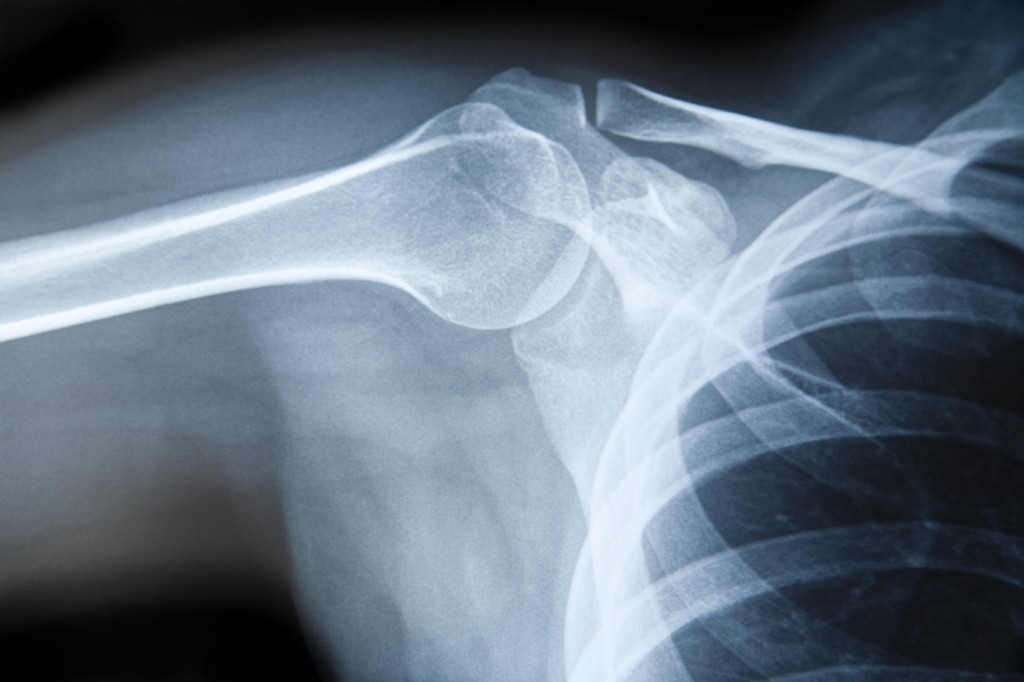
For radiology departments, medical waste removal plans must involve managing analog x-ray waste. Medical waste producers, including hospitals, private practice offices, dental facilities, and even veterinary offices must have a medical waste removal plan to keep staff and patients safe, healthy, and free from contamination. This process includes having a program in place for removing and disposing of sharps, surgical instruments, bandages, one-time use medical equipment, just to name a few. For radiology departments, medical waste removal plans are a bit more complicated when it comes to dealing with a popular and necessary diagnosing tool: x-rays.
While many medical offices are moving towards digital x-ray machines, analog machines generate dangerous chemicals that must be dealt with and handled in a manner that is not only compliant, but protects users and the environment.
What, exactly, are the dangers of x-ray medical waste?
X-ray Fixer
X-ray fixer, or x-ray fixer solution neutralizes any developer remaining on the film, removes undeveloped silver halides, and hardens the emulsion. What makes it dangerous is its chemical makeup: it contains high concentrations of silver, typically 3,000 to 8,000 mg/l of silver. Because of this silver content, used x-ray fixer must be managed as a hazardous waste. Used fixer cannot be poured down the drain or disposed of as regular solid waste.
X-ray Developer
X-ray developer contains a chemical known as hydroquinone, which is a highly toxic substance. It is a skin irritant, and when exposed improperly, persons can develop symptoms such as dizziness, headache, nausea, vomiting, lack of oxygen in the blood, and any dust that gets in the eyes can lead to impaired vision, among other injuries. Only UNUSED developer is toxic; once it has been used, it is safe to dispose of in the sink or toilet.
X-ray Film
Used x-ray film also contains silver, just like x-ray fixer. If the concentration is high enough, it is considered hazardous waste and must be treated as such. It is best disposed of through silver recycling.
Lead Aprons and Gowns
Yes, even the protective equipment against x-ray radiation is toxic, and these items do not belong in the regular trash, rather the biomedical waste red bag. Many suppliers or the original will take aprons and gowns no longer required for recycling or proper disposal.
Despite the move towards digital, many facilities still use analog x-ray machines. Let MedXwaste be your industry expert on the management of biohazardous waste management programs, including x-ray waste.
Service Areas: Long Island Medical Waste; New York City Medical Waste; Westchester Medical Waste and more!
Medical professionals must keep tabs on pharmaceutical samples and have a pharmaceutical waste removal plan in place just like they would for medical waste.
Medical offices are busy facilities that manage more than just patients; doctors and office managers must keep tabs on patient data, appointments and schedules, patient history, and planning for medical waste removal. This is only a small part of managing a medical facility, but perhaps one less talked about necessity of medical management is the pharmaceutical sample closet that medical offices keep.
Pharmaceutical representatives, also known as drug reps or pharmaceutical salespeople, provide drug information and product samples to physicians. That means physicians are in possession of many drugs, albeit in smaller quantities, but the amount of samples can quickly add up and fast.
It’s important for medical professionals to keep proper inventory in an organized closet, away from patients, and fashion a plan much as they would a medical waste removal plan.
This includes:
Routine cleanup of the sample space.
Medications all come with expiration dates. Managers should routinely check the sample supply closet for expired samples and dispose of them as they would other pharmaceutical waste.
Appointing one person to manage the samples.
Just as the saying goes, too many cooks spoil the broth. If there are too many hands rummaging in the pharmaceutical sample closet, there’s too much room for error. Offices run this risk of clutter, mismanagement, losing expired meds in the shuffle, and not knowing who is taking samples and when, not to mention why. Keep a trustworthy employee in charge of the sample closet, keep a log of medications coming in and going out, manage any and all recalls, and of course, follow the routine cleanup rule.
When it’s time to cleanup, dispose of the medication properly.
While the FDA has and still recommends flushing certain medications depending on the state, the best course of action is to research a take-back program. Much like having a medical waste disposal program ready, busy medical offices need to have a pharmaceutical disposal program in place. Just like we segregate medical waste, it’s important to separate pharmaceutical waste, too. Rather than gamble with the environment and the health of our communities, it is best to speak with a medical waste removal agent, like MedXwaste about disposing unused and unwanted medications.
In addition to designing a medical waste removal plan that includes sharps removal and disposal, MedXwaste can help busy medical offices keep their medication samples in check.
Contact MedXwaste today!
Service Areas: Long Island Medical Waste; New York City Medical Waste; Westchester Medical Waste and more!
Medical waste removal is not exclusive to healthcare facilities. MedXwaste also serves colleges and universities, too.
Believe it or not, colleges and universities are generators of regulated medical waste, and must dispose of this waste in accordance with federal and state regulations. Where, exactly is medical waste produced in an educational facility? Colleges and universities typically offer on-site care for students at on-campus health offices, and of course, there are medical colleges that deal with medical waste day-in and day-out, whether it’s for nursing programs, medical degree programs, dental programs, and veterinary programs.
For medical colleges, medical waste is produced in courses that deal with the study of bacteria, microbiology, hematology, immunology, phlebotomy, and other clinical sciences in a lab setting.
These facilities produce medical waste in the form of lab cultures and stocks of infectious agents for study, animal parts, tissues, fluids, and carcasses from teaching laboratories, sharps waste including hypodermic needles, syringes, scalpels, razor blades, knives, lancets, and disposable surgical instruments. For dental schools, this includes dental wires and disposable dental instruments.
Of course, there are on-campus health offices that offer basic care to students who require medical attention, therefore conduct health checks using a myriad of medical equipment, from swabs to gauze to sharps that must also be disposed of properly. This also goes for colleges that have on-site EMS.
Just like any hospital or other facility that produces medical waste, these institutions are subject to the same rules and regulations when disposing medical waste.
Medical waste must be segregated at the point of generation and placed in the proper container. Sharps waste must be collected at the point of generation in a rigid, puncture-resistant container that is certified by the U. S. Food and Drug Administration.
MedXwaste is proud to service medical colleges, veterinary colleges, dental schools, and university health offices for compliant, legal, and safe medical waste removal. We also offer our online OSHA Compliance Training program for university staff for the safest handling and transmission of medical waste.
Contact MedXwaste today to discuss routine services for your educational facility.
Service Areas: Long Island Medical Waste; New York City Medical Waste; Westchester Medical Waste and more!
Medical spas are becoming a staple in many towns and communities. Here’s how MedXwaste serves the medical spa industry.
Medical waste removal programs ensure the health and safety for members of the public, as well as healthcare facility personnel by minimizing or eliminating exposure to biohazardous wastes containing pathogenic organisms and sharps. This is not exclusive to hospitals and laboratories, but also tattoo parlors, veterinary practices, funeral homes, and assisted living facilities, but that’s not all that’s included under the medical waste umbrella.
There is a growing demand in the spa industry that goes above and beyond massages and pedicures; nowadays, many clinics are opening medical spas – hybrids of medical clinics and day spas – that help patients with cosmetic enhancements. This includes Botox injections, skin rejuvenation, laser hair removal, laser vein therapy, collagen induction therapy, and medical grade peels.
A medical spa is less about relaxation and more about physical, visual results, but these treatments are given in a spa-like environment. However, medical spas may also offer relaxing therapies, such as acupuncture, which require needles that go below the skin’s surface.
In addition to the above procedures, many offer permanent cosmetic application, such as permanent make-up, which is administered similarly to a tattoo; a sterilized, disposable needle is used to implant colored pigment beneath the top layer of skin.
Because of the very nature of the services offered, medical spas are held accountable for their medical waste just as any other producer of medical waste. This includes the implementation and enforcement of medical waste regulations as they apply to handling, storage, treatment, and disposal of biohazardous waste.
Most medical spas have at least one doctor, esthetician, and nurse on hand, all of which must be knowledgeable in medical waste removal procedures.
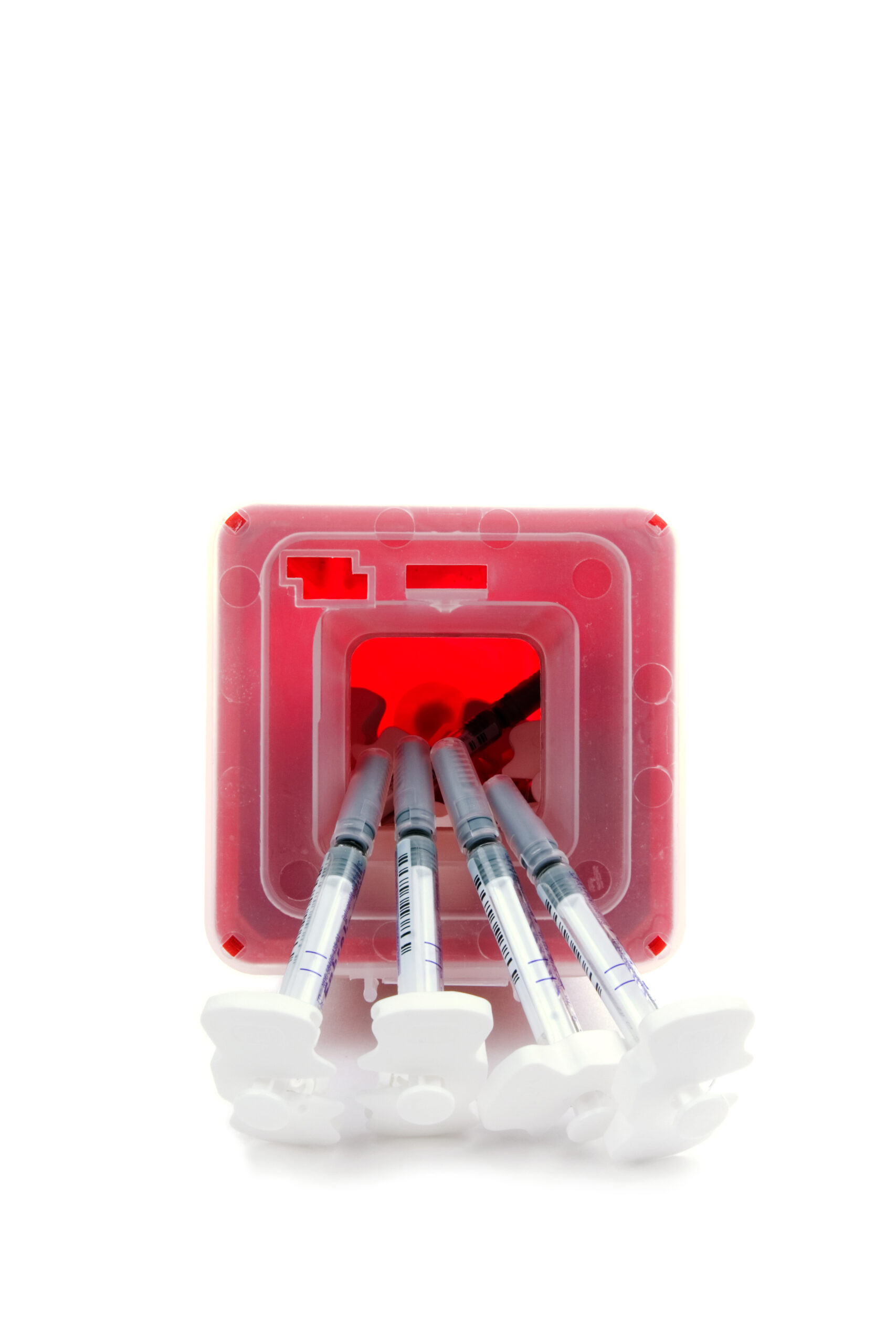
Medical spas also deal with a lot of sharps waste, which is a term applied to objects such as needles and scalpel blades. A sharps hazard lies in the fact that it is designed to pierce the skin. Wastes containing both infectious material and sharp objects create particular hazards for anyone handling them or coming into contact with them.
MedXwaste offers medical waste removal programs for medical spas, whether it’s needles, red bag waste, or any other medical waste. We also offer an online OSHA Compliance Training program for all staff that work at medical spas for safety training and safety planning.
Contact MedXwaste today to learn about all of our products and services, including the safe disposal of medical spa waste.
Service Areas: Long Island Medical Waste; New York City Medical Waste; Westchester Medical Waste and more!
Medical waste is not exclusive to healthcare practices, and perhaps more common, but less talked about facilities include government agencies, like VA hospitals, prisons, and military bases.
This week, we’ve taken a deeper look into some of the industries we serve that go above and beyond healthcare facilities like hospitals and medical clinics. Medical waste is not exclusive to healthcare practices, and perhaps more common, but less talked about facilities include government agencies, of which MedXwaste serves.
Veteran’s Affairs Hospitals
While these fall under the hospital category, VA hospitals are not private entities. VA medical facilities are run by the Veterans Health Administration of the United States Department of Veterans Affairs. There are approximately 1,700 hospitals, outpatient clinics, counseling centers and long-term care facilities under the VA. The VA provides wellness programs, including vaccinations, and offers eligible veterans hospital care, including outpatient services, well visits, and sick visits. VA facilities also offer screenings for communicable diseases, including hepatitis testing, treatment, research, and prevention.
Prisons
Health care services, which include medical, dental, and mental health care are provided to inmates by on site health care staff, and therefore are part of the healthcare industry under the Department of Corrections by state. Some institutions have chronic care clinics to provide services to patients with diabetes, heart conditions, and other chronic conditions. Many prison facilities offer on-site medical providers, registered nurses, mental health liaisons, and pharmacists, among other clinical staff.
Military Bases
The VA and military health systems are completely different. The VA system is part of the Department of Veterans Affairs, while the military system is overseen by the Department of Defense. The Army, Navy, Air Force, Marines, and Coast Guard have an integrated health care system known as the Military Health System. Military hospitals and clinics are found at military bases and posts globally. These facilities provide healthcare to active duty personnel and their families.
MedXwaste not only follows government agencies like OSHA to make sure our clients are updated on all rules and regulations in medical waste removal, we also service them as well.
We focus on making our medical waste management services flexible, compliant, and convenient. As a provider of medical waste disposal services, protecting people and the environment from the risks associated with biohazard waste is at the heart of what we do.
Contact MedXwaste today!
Service Areas: Long Island Medical Waste; New York City Medical Waste; Westchester Medical Waste and more!
Airport Medical Waste? Handling Medical Waste in the Least Likely Places.
Being in the medical waste removal industry, we tend to cover a lot of topics that deal with more common medical waste producers, such as hospitals, laboratories, and medical clinics. While those are the more common producers of medical waste, there are some obscure industries that, dare we say it, might fly right over your head.
While the bad pun may have been intentional, it’s actually a clue to the least common place you’d think of that would be associated with medical waste.
It’s the airport!
Frequent fliers may be aware that airports such as O’Hare International Airport and JFK International Airport are also home to busy medical clinics, but for those less traveled, it might be a bit of surprising trivia.
These facilities are available for travelers who may have fallen ill or in need of travel medicine, including vaccinations. JFK Advanced Medical P.C. offers international travelers pre-travel consultation and evaluation, contingency planning during travel, as well as post-travel follow-up and care. The clinic also administers immunizations based on the CDC’s recommendation for international travel.
Aside from in-house medical clinics, airports are havens for all kinds of trash, and believe it or not, some of it is considered regulated waste despite it seeming harmless.
According to the Orlando Sentinel, the Orlando International Airport and Orlando-Sanford International Airport treats uneaten scraps of food as medical waste.
The reason?
This type of trash cannot be tossed into a dumpster with other garbage. This garbage must actually be treated because it falls under two jurisdictions: the U.S. Department of Agriculture (USDA) and Customs and Border Protection (CBP). This is to prevent the spread of agricultural or animal disease into the U.S.
While the concern is valid, it becomes an additional set of regulations for airport officials.
Jet Air, a Fixed Base Operator (FBO) at Austin Straubel International Airport (GRB) in Green Bay, Wisconsin installed a trash-sterilization building, fitted with what is similar to a large hospital autoclave to handle all international trash.
So, you see that medical waste is not something that is exclusive to the medical industry itself; medical waste is a broad term that covers even what seems innocuous, and that includes food scraps from other countries that could pose a harm to domestic agriculture and wildlife.
MedXwaste services all industries, from healthcare to veterinary, and yes, even airport medical waste removal. Our industry experts work with you to create safe, responsible, and customized programs to collect and dispose of your medical waste.
Contact MedXwaste today!
Service Areas: Long Island Medical Waste; New York City Medical Waste; Westchester Medical Waste and more!
How sharp is your sharps safety knowledge? Take the quiz to find out!
[WpProQuiz 1]
Workplace Safety: Why the Medical Waste Community Needs OSHA
If workplace safety is important to you, you need to know about OSHA.
“OSHA doesn’t kill jobs; it helps prevent jobs from killing workers.”
These are the words written by Dr. David Michaels when he became head of the Occupational Safety and Health Administration in 2009.
If you have a job, then you’ve probably heard about OSHA; it is the arm of the Department of Labor whose mission is to “assure safe and healthful working conditions for working men and women by setting and enforcing standards and by providing training, outreach, education and assistance.”
OSHA officially formed on April 28, 1971, not long after the Occupational Safety and Health Act was signed into law on December 29, 1970 by President Richard M. Nixon.
So what is OSHA and why do we need it?
The United States Department of Labor reports on its Job Safety and Health fact sheet: “Each year, approximately 6,000 employees in this country die from workplace injuries while another 50,000 die from illnesses caused by exposure to workplace hazards. In addition, 6 million workers suffer non-fatal workplace injuries at an annual cost to U.S. businesses of more than $125 billion.”
Essentially, OSHA exists to keep employees safe. Investing time and money into workplace safety will pay off in the long term, and this is especially true in the medical waste community. That is precisely why we need OSHA.
OSHA works. It saves lives and reduces injuries/illnesses, and this, in turn, helps businesses. The safer the workplace, the better for any company and its employees. Workplace accidents can result in hefty medical costs and legal fees, not to mention decreased productivity due to workforce absences.
OSHA regulations can seem a bit overwhelming, especially for smaller businesses, like tattoo parlors that deal with medical waste but do not operate like a large-scale hospital. Creating a safety plan for your business and making sure you company is OSHA compliant involves ongoing work, but MedXwaste can help.
Through our online OSHA Compliance Training Program our customers have access to information on all OSHA standards, particularly those that pertain to the medical waste community. We can help your facility obtain information on first aid procedures and protection against bloodborne pathogens in the workplace. Bloodborne pathogens training is required for workers who have occupational exposure to these, such as medical workers, emergency workers, and yes, tattoo artists.
We also have the 411 on identifying hazardous substances in the workplace and training on how to treat injuries from these substances. All hazardous substances will have Material Safety Data Sheets (MSDS). You must obtain these sheets from the manufacturers, keep them in a place where employees can find and refer to them, and train employees on how to read them to find information on treating injuries. Our program offers access to millions of MSDS/SDS.
Remember, creating workplace safety is not only beneficial, it’s the law. Let MedXwaste help you with all of your OSHA needs and questions.
Contact us today!
Service Areas: Long Island Medical Waste; New York City Medical Waste; Westchester Medical Waste and More!
Bloodborne Pathogens: 5 Facts
What are bloodborne pathogens and why did OSHA create a formal standard to deal with the hazards? Bloodborne pathogens are an occupational hazard for healthcare workers and other employees who may be exposed to blood and other potentially infectious materials as a result from the performance of their duties. According to OSHA, a bloodborne pathogen simply refers to “…pathogenic microorganisms that are present in human blood and can cause disease in humans.”
Unsafe medical practices, such as improper injection administration and disposal can lead to increased risk of exposure to bloodborne pathogens, including hepatitis c, hepatitis b, and HIV, just to name a few.
It’s well known that bloodborne pathogens are a serious environmental and health issue worldwide, which is why the CDC and OSHA have a stringent set of laws, guidelines, and other protocols for healthcare workers and the communities they serve. Some facts and statistics are still rather staggering given the advancement of medical technology and disease control efforts.
Did you know?
- According to the CDC, the primary pathogens for concern are the human immunodeficiency virus (HIV), hepatitis B virus (HBV), and hepatitis C virus (HCV).
- According to Occupational and Environmental Medicine, health workers had 60 percent greater odds of getting hepatitis C, and those who worked directly with blood had almost triple the risk.
- According to OSHA, it’s not just health care staff that are at risk for exposure to bloodborne pathogens. First responders and housekeeping personnel in some industries are also at risk.
- According to the American Society for Microbiology, blood-borne pathogen transmission occurs predominantly by percutaneous (effected through the skin) or mucosal exposure of workers to the blood or body fluids of infected patients.
- According to the report Sharps Injuries Among Hospital Workers, Massachusetts, 2010, more than half of all nurses will experience at least one needlestick during their career.
Healthcare facilities and other institutions that deal with hazardous or medical waste must make it a top priority to prevent the spread of infection. OSHA’s Bloodborne Pathogens standard came into play following the Needlestick Safety and Prevention Act of 2000. The standard, if adhered to correctly, provides for reasonable protection against illnesses including Hepatitis B & C, HIV and other bloodborne illnesses.
It’s a known fact: medical waste can spread disease because it contains high amounts of disease-causing microorganisms. These pathogens make medical waste very dangerous, therefore how medical waste is handled and disposed is part and parcel to the prevention of infection.
MedXwaste can help your facility design and implement a safety program that with our online OSHA Compliance Training Program that covers not only infection control, but also safety for your staff when it comes to bloodborne pathogens.
Service Areas: Long Island Medical Waste; New York City Medical Waste; Westchester Medical Waste and More!
Top Medical Waste Removal Mistakes
Is your facility guilty of these common medical waste removal mistakes? Laboratories, hospitals, private practice offices, dental facilities, and even veterinary offices are all places that produce medical waste, and they are required by federal, state, and even local laws, to create a medical waste removal plan.
Despite the abundance of information on proper disposal and the laws that back this up, there are still some common mistakes that people make with medical waste removal. Not only is this a compliance issue, it’s an environmental and health issue that can be costly and detrimental if ignored.
What are some of the top medical waste removal mistakes?
Inconsistent training of staff
A compliant, safe, and efficient medical waste removal program is only as strong as the people who implement and follow it. One of the top mistakes medical waste generators make is not training staff consistently. It is imperative that facilities employ the use of the resources available, not only because it’s the law, but a streamlined program mitigates risk. Agencies like the EPA and OSHA offer resources for medical waste producers to help prepare a training program that will ensure the safety of workers, as well as decrease the chances of infection and contamination.
MedXWaste can help you develop a program for proper and compliant medical waste removal through our OSHA training program.
Improper labeling of medical waste and biohazardous waste containers
Medical waste packaging and labeling in a facility that deals with regulated medical waste is the responsibility of the facility itself. Packaging includes sharps containers, biohazard containers, plastic bags, and reusable containers. Failure to comply with safe containment is both an environmental issue and community health issue, one that can comes with hefty fines.
Many states categorize waste into sub-categorizes, such as cultures and stocks, human blood, blood products, sharps, and animal waste. Keeping types of medical waste separate and using properly marked containers is not only mandated by law, it helps you choose how and when, not to mention whom removes the waste for you.
Mishandling of medical waste and removal
Whoever signs the manifest for waste pickup must have had the proper OSHA/DOT training and knowledge behind the medical waste. If your average Joe signs for anything that involves medical waste, your facility will receive a citation for non-compliance.
Inadequate signage
Hazardous waste requires special handling, disposal, and storage. Both the EPA and DOT have requirements that must be met in order to properly store and dispose of waste. Failure to post signage about restricted areas, hazardous containers, or infection control can put staff and patients at serious risk
Avoid mistakes. Work with a medical waste removal provider like MedXwaste.
The best way to avoid mistakes is to work with a certified and professional medical waste removal provider like MedXwaste. Established by professionals with extensive experience in the medical waste business, MedXwaste helps our customers to stay in compliance with the law.
Contact MedXwaste today to discuss our full-service options, from pickup to training and compliance.
Service Areas: Long Island Medical Waste; New York City Medical Waste; Westchester Medical Waste and More!